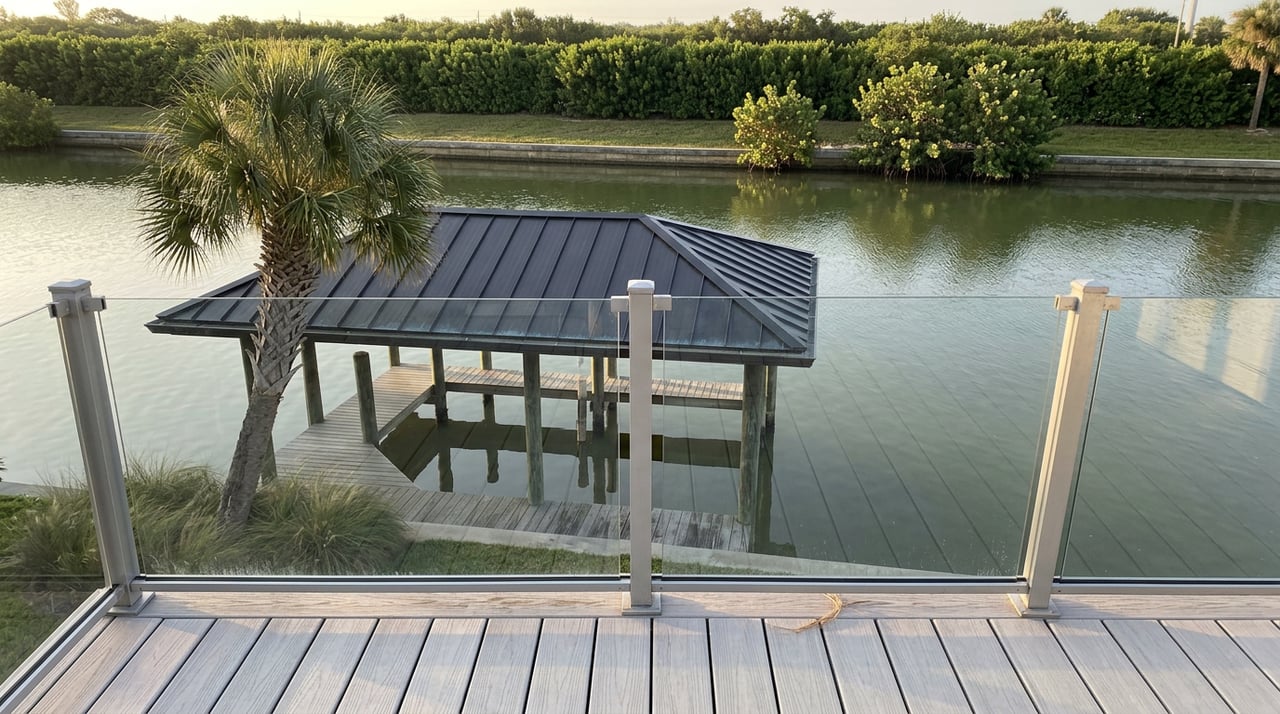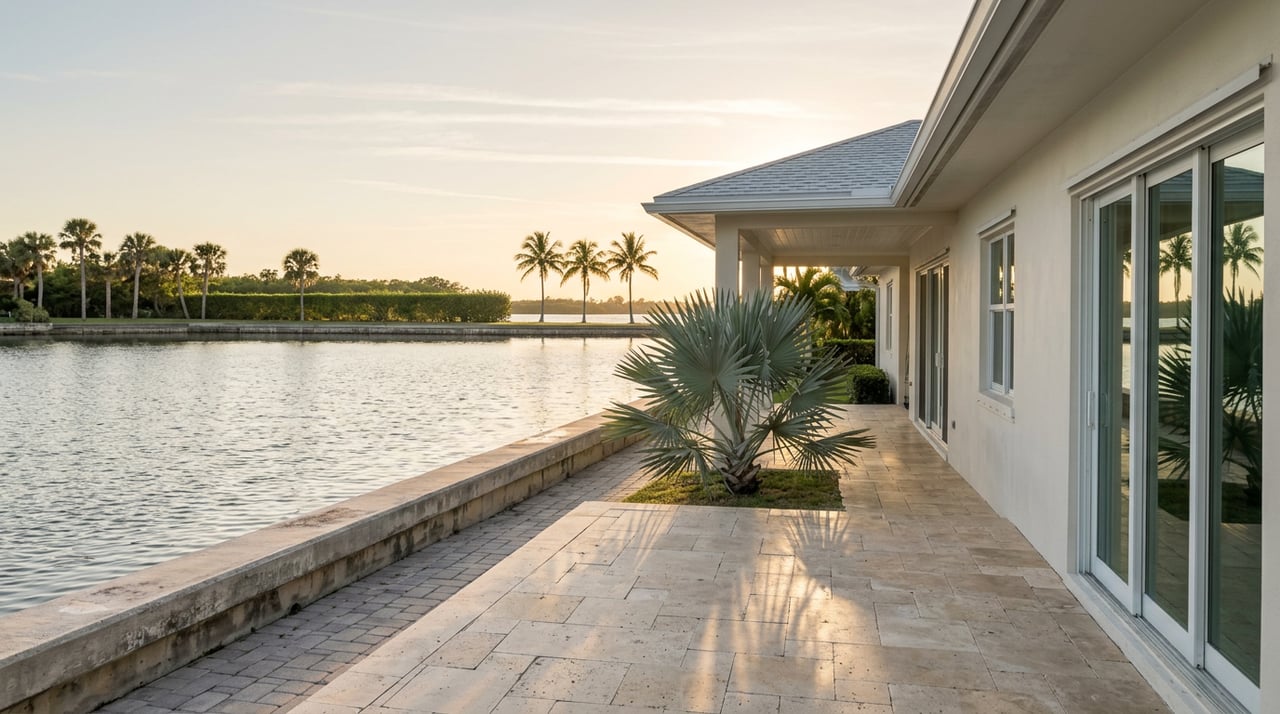
A homeowner on South Tropical Trail gets three bids on a seawall repair. All three come back in a reasonable range, low five figures, patch the cap, seal the cracks, done in a couple of weeks. Then the contractor pulls the first panel and finds more corrosion behind it than the visual inspection showed. Now the job isn't a repair anymore. Under Brevard County code, once the work crosses a certain threshold, the whole wall gets treated as new construction. The number on the second quote looks nothing like the number on the first.
This is the mechanism that catches Merritt Island sellers off guard more than any other single issue on a waterfront listing, and it has nothing to do with how the wall looks from the dock.
Why This Is a Merritt Island Problem Specifically
Canal-front and Lagoon-front construction on Merritt Island took off during the 1960s and 1970s, in the years surrounding NASA's expansion at the Cape. Neighborhoods like Holiday Cove and the older stretches along South Tropical Trail were largely built out in that window. If a seawall in one of those communities was never replaced or significantly rebuilt, it's now somewhere between 50 and 60 years old.
That age matters more here than it would inland. The Indian River Lagoon and Banana River are estuarine, meaning brackish water where fresh and salt water mix, and that chemistry corrodes steel and aluminum components faster than fresh water does. A seawall on a freshwater lake in central Florida ages differently than one holding back the Lagoon. Merritt Island's waterfront inventory sits squarely in the zone where this kind of aging is now showing up in real transactions, not hypothetical ones.
The Rule That Turns a Repair Into a Rebuild
Brevard County's building code treats major seawall repairs beyond a set threshold as new construction, not maintenance. In practice, this means a contractor can't simply patch the worst section and call it finished if the deterioration extends far enough. Once the repair scope crosses that line, the entire wall falls under replacement rules, which pulls in a structural review and a different permitting path than a routine repair would.
This is why the first quote and the second quote can look like they belong to two different projects. The first one assumes a contained repair. The second reflects what the contractor actually found once the wall was opened up. Anyone who has been through a seawall project on the Lagoon will tell you the same thing: the visible damage is rarely the whole story, and the invisible damage is what decides which side of that threshold you land on.
Here's what the range looks like on paper, using current 2026 pricing for Indian River Lagoon marine construction:
| Scope of work | Typical cost per linear foot |
|---|---|
| Targeted repair (cap, sealing, localized panel work) | $100 to $400 |
| Full replacement (before permitting fees) | $200 to $600 |
| Cap replacement only | $30 to $150 |
For a seller, the gap between the bottom row and the top row of that table isn't academic. It's the difference between a repair you can absorb before listing and a capital project that changes your pricing strategy.
What a Walk Along the Wall Won't Tell You
Standing on your own seawall and looking for cracks is a reasonable first step, but it only catches the damage that's already visible. The detail that actually predicts future failure is drainage, and it's the part most casual inspections skip entirely.
Seawalls have weep holes, small openings near the waterline that let water pressure behind the wall release instead of building up. When those holes get blocked by sediment, roots, or mineral buildup, pressure accumulates behind the wall every time it rains. Brevard County's summer storms can drop several inches in a short window, and a wall with blocked weep holes is absorbing that pressure with nowhere for it to go. This is the kind of failure mode that looks fine from the yard right up until it doesn't.
None of this shows up on a standard home inspection. A seawall isn't like a roof or an HVAC system where a licensed inspector checks a defined list of items. It requires someone who specifically evaluates marine structures, and on a canal system that's aged into its fifth or sixth decade, that inspection is worth scheduling before you ever put a sign in the yard.
What to Pull Before You List
If you're getting ready to sell a canal-front or Lagoon-front home on Merritt Island, there's a sequence that puts you ahead of a buyer's questions instead of behind them.
- Search the Brevard County permit database for any prior seawall-related work on your address. A permitted repair or replacement leaves a paper trail, and its absence tells you just as much.
- Check your property card through the Brevard County Property Appraiser's office for the original construction date, which gives you a reasonable estimate of the seawall's age if it's never been replaced.
- Schedule a marine contractor inspection that looks specifically at drainage, tieback condition, and panel integrity, not just the visible cap.
- Review your own disclosure language carefully. If you know of prior repairs, leaning, or drainage issues, that belongs in the disclosure regardless of how the wall looks today.
Buyers working with an experienced agent are going to ask these same questions during due diligence. Answering them before the home is listed keeps the conversation from turning into a renegotiation once you're already under contract.
The Insurance Wrinkle That Shows Up Next Door
There's a second layer to this that surprises even buyers who did their seawall homework. FEMA's Risk Rating 2.0 methodology prices flood insurance based on the characteristics of the specific property, not just the flood zone it sits in. Two houses next door to each other on the same canal, with the same flood zone designation, can carry noticeably different insurance costs depending on elevation, structure, and other property-specific factors.
For a buyer comparing two similar-looking waterfront homes on Merritt Island, this means the insurance quote is worth getting early, not after the inspection period is nearly over. A seawall that needs work and an insurance premium that runs higher than expected can each independently affect financing, and together they can change the math on an offer.
What This Means If You're the One Buying
If you're the buyer rather than the seller, the same information works in your favor when you know to ask for it. A listing agent who can hand you permit history, a recent marine contractor's condition report, and a straight answer about the wall's age is giving you exactly what you need to make an informed offer instead of a hopeful one. On a canal system where a meaningful share of the inventory is now over 50 years old, that transparency is what separates a smooth closing from a renegotiation two weeks before the walkthrough.
A Few Questions Worth Asking Directly
Does a seawall repair always need a county permit? Yes. In Brevard County, marine construction, which covers docks, seawalls, and boat lifts, is a standalone permit category separate from a standard building permit. It doesn't ride along on other work.
Can I just repair the section that's visibly damaged? Sometimes, but not always. If the repair scope crosses the threshold Brevard County treats as major work, the whole wall gets classified as new construction rather than a repair, which changes both the permitting path and the cost.
Is an older seawall a reason to avoid a property? Not necessarily. Plenty of older seawalls on Merritt Island are sound and well maintained. The point isn't to avoid older waterfront inventory, it's to get a real inspection and a permit history before you're relying on assumptions.
Where This Leaves You
A seawall quote is only as useful as what it's actually quoting. On Merritt Island's older canal-front streets, the difference between a repair and a replacement often isn't visible until someone opens the wall up, and by then it's better to have already known the age, the permit history, and the drainage condition going in.
If you're getting a waterfront home on Merritt Island ready to list, or you're comparing properties and want a straight read on what a seawall's condition actually means for your offer, Silvia Mozer works this market from the canal side out. Let's Connect — Request Your Private Consultation.